

Published: November 2019 | Updated March 2026
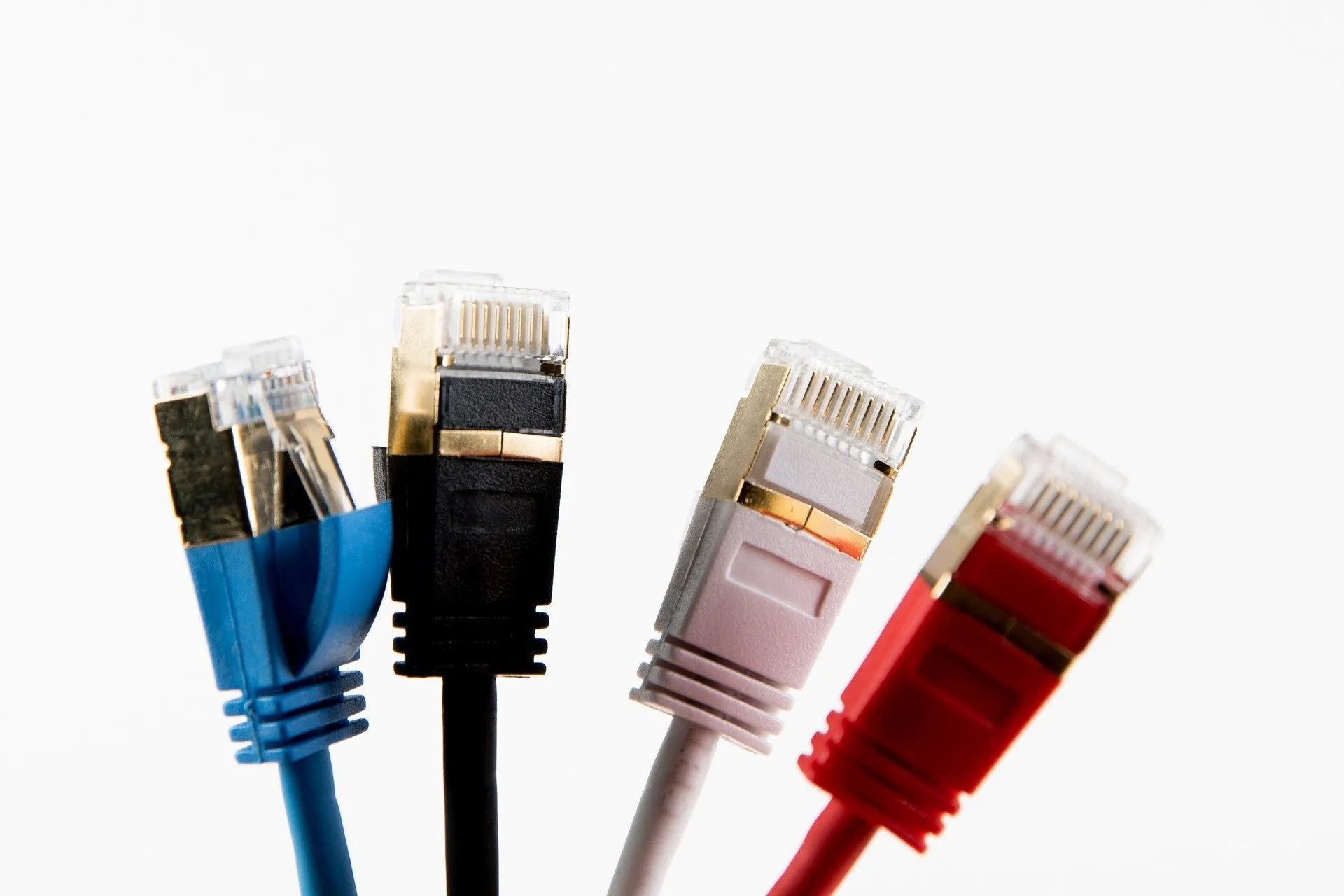
Every ethernet cable you’ve ever plugged in contains four pairs of wires twisted together at different rates — and that twisting isn’t decorative. It’s the mechanism that makes wired networking reliable in environments full of electromagnetic interference: fluorescent lights, power cables, wireless routers, and nearby switches. This post explains the physics of why twisted pairs cancel interference, the practical difference between UTP and STP, and why a good Cat6 cable will consistently outperform Wi-Fi for anything that matters.
The Science Behind the Twists
Imagine you’re stuck in Joburg traffic on the N1, and taxis are weaving in and out, causing absolute havoc. That’s what electromagnetic interference (EMI) does to your network signals—total SHIT (Significant Havoc In Technology).
Twisting the wires together is like Metro cops suddenly showing up and forcing some order on the road. The twists cancel out interference, keeping your connection clean and stable, even if your neighbours have Wi-Fi routers that look like they belong in NASA.
Each pair in a LAN cable carries signals in opposite directions, and by twisting them at different rates, they cancel out the noise that would otherwise maak ‘n gemors of your data. No twists = more noise = your Teams call sounding like a dial-up modem from 1998.
Why It’s Critical in Mzansi
South Africa’s network infrastructure isn’t exactly free from challenges. Between Eskom doing surprise bandwidth load shedding (also known as power outages) and LTE connections that disappear faster than your paycheck on payday, a good old wired connection is sometimes your best bet.
And if you’re running a small business from home (because load shedding made remote work mandatory), you want your Ethernet cables to be rock solid—otherwise, you’re explaining to clients why their Zoom meeting sounds like an alien invasion.
UTP vs. STP – The Cage Match
So, you’ve probably heard about UTP (Unshielded Twisted Pair) and STP (Shielded Twisted Pair). What’s the difference? Well, think of it as the difference between:
- UTP (Unshielded Twisted Pair) – Like driving a Citi Golf in downtown Pretoria. It does the job, but you might feel every pothole (or interference) along the way.
- STP (Shielded Twisted Pair) – Like rolling in an armoured Fortuner, ready for anything. It has extra shielding to block interference, perfect for noisy industrial environments or those datacentres running next to dodgy power supplies.
For most South African homes and offices, UTP is perfectly fine—it’s cheaper and works well unless you’re setting up your network in an area with heavy EMI, like next to a power substation or inside an Eskom power plant (if it’s actually online).
The “Just Buy a Good Cable” Rule
A proper Cat5e, Cat6, or Cat6a cable with well-twisted pairs will outperform your Wi-Fi any day, especially if you’re gaming, streaming, or running VoIP calls. Wi-Fi is nice until you realise your fibre line is fast, but your Wi-Fi router is still doing Nyovest speeds (slow, but stylish).
Pro tip: Avoid those dodgy “flat LAN cables” from online sellers that look nice but have zero twists—that’s like a boerewors roll without the wors.
Wrapping Up with some Final Thoughts
Twisted pairs are one of those small engineering miracles that keep your internet from turning into a haunted house of lag and packet loss. Next time you see a LAN cable, respect those twists—they’re working harder than your UPS during Stage 6 load shedding.
Now go check your cables and make sure you’re not running something from the Dial-up Dark Ages! And if your Wi-Fi is still acting up… well, that’s another story.
Key Takeaways:
- Each twisted pair carries signals in opposite directions — the electromagnetic fields cancel each other out, eliminating most external interference without shielding
- Different twist rates per pair prevent crosstalk between adjacent pairs inside the same cable — the varying rates mean interference from one pair doesn’t align with another
- UTP (Unshielded Twisted Pair) is suitable for most office and home environments; STP (Shielded Twisted Pair) adds metallic shielding for industrial environments or locations near heavy electrical equipment
- Cat6 is the recommended minimum for new business network installations — it supports 10 Gbps at up to 55m and 1 Gbps at 100m with better crosstalk performance than Cat5e
- Flat LAN cables (common in online retail) typically have minimal or no twisting — they perform poorly under load and should be avoided for anything beyond casual home use
- A properly installed Cat6 wired connection provides lower latency, higher throughput, and greater reliability than Wi-Fi for VoIP, video conferencing, and cloud applications

Written by
Ronald Bartels
Director: South Africa · Nepean Networks · Johannesburg, South Africa
Ronald has over 30 years of hands-on networking experience spanning financial services, ISPs, and enterprise technology. He led infrastructure at Investec for nearly eight years, managed core IP networks at iBurst, and served as a solutions architect designing data centre migrations for governments and financial institutions. Since joining Nepean Networks in 2019, he has been the driving force behind SD-WAN adoption in South Africa — engineering resilient connectivity solutions purpose-built for the realities of the local market, including load shedding, mixed-quality last mile, and infrastructure variability. Ronald holds a BSc in Computer Science from Stellenbosch University and is a Certified Data Centre Professional (CDCP).